Ondoy

Like many people sitting here in the United States I’m exposed to the news of the world day in and day out. We see disasters and tragedies on a macro and micro level all the time. Most of it bounces off of the layer of callousness gained to protect ourselves from the emotional devastation we’d feel if our empathy was unchecked. It is when events touch you on a personal level that they creep under the barbed wire we’ve unrolled around our emotive centers and grab the ends of those neurons and twist.

What’s twisting me currently is tropical storm “Ondoy” which recently hit the Philippines with a vengeance. I know people in that country and specifically in Metro Manila and other storm affected areas where the devastation of the flooding is just starting to be dealt with. Currently there are still people waiting for help on rooftops. Newly rescued people are cold, hungry, and dehydrated while they wait to go home and see what ruins they will find. It seems there was woefully too little government response and as usual aid agencies like the Red Cross are doing their best to provide help and comfort.

It’s too easy to play the numbers game and say that there were too few deaths or too little devastation to make a disaster worth noting. “It’s not the Sichuan earthquake or the Indian Ocean tsunami of 2004” some would think and dismiss things. Beyond viewing people as a cumulative grouping they are individuals and a small car accident can affect one as much as if a volcano erupts nearby. We can’t help every person nor financially support all relief programs in the world but contributing to recovery efforts in smaller disasters means that you will have a larger impact on helping people in need. Don’t forget those in distress because they are not getting the lion’s share of the news cycle.

For individuals here in the United States we can’t easily get clothing or food stuffs to the Philippines so it seems a monetary contribution is the most expedient method of providing disaster relief. I found two ways for us here to quickly contribute to The Philippine National Red Cross which is working hard to help out in this crisis:

This link takes you to their website and will allow you to contribute via credit card.

This link takes you to site that has a PayPal link for contributions. You’ll want to read the post before you choose this and judge for yourself if it’s trustworthy.

Update 9/26:

This link is for the GMA Kapuso Foundation which is currently collecting funds to help the victims. It’s a credit card donation system but takes U.S. dollars so does not require currency conversion.

This link is for a blog which is putting together a group donation via PayPal.

Update 9/28

This link is for the UNICEF page to donate to help the children who are victims of the disaster. This online form works with credit cards.

Update 9/29

Now that several days have passed I see many options popping up for people in the U.S. to donate to the relief efforts. If you google you’ll find some charity or organization to suit you preferences I’m sure. I’ve got one more link to post here and it probably will be my last one.

This link goes to the The Ayala Foundation which is a nonprofit development organization of the Ayala Group of Companies. This takes donations via credit card but in pesos so you’ll need to convert.

If you can’t help in this way I hope you spare a few seconds to think some good thoughts for all those who are rebuilding and trying to get their lives back to normal in the Philippines.

I’ve not mentioned in this post yet how I donated. The first day of the flooding I sent money to The Philippine National Red Cross. A day after that I did the same to UNICEF. As they say every little bit helps and I really hope that’s true.

The Grumbling Gourmet

I love to cook and I love to try new recipes from different cultures and countries. Learning about these different cuisines is fun and the pièce de résistance is making something that doesn’t make anyone turn green and double over. Of course I know that my endeavors may not taste authentic especially since I usually have trouble obtaining spices or ingredients you just can’t find in my gastronomically challenged area. Nothing gets in the way of my trying to make tasty things, however.

Until recently I kept myself busy with Indian, Pakistani, Spanish, Mexican and whatever other dishes caught my attention. Food from the Southwestern region of the U.S. is also great and might as well be foreign here (unless you count Taco Bell as food). Even with that track record I never thought that I’d be making dishes from a place that a year ago barely registered on my cooking radar.

This all goes back to what some friends of mine call “that Philippines thing you have” with a bit of befuddled amusement. What they refer to is that through my hobby of using and collecting fountain pens I’ve made friends with a number of Filipinos who have shared (or have been prompted by my incessant questions) a litany of information on their culture and food. Armed with this I usually spit out facts at a rapid fire pace when anyone gets snarky about me knowing people on the other side of the planet. “Did you know we were at war with the Filipino people and were de facto colonial rulers?” “There are over 7100 islands in that nation.” “Manila is both a city and a metro area made up of a number of cities with over 11 million people. It’s the 11th largest metropolitan area in the world and one of the most densely populated.” “Yes, they speak English there but also Tagalog and a number of other regional languages.” By the time I get to that point everyone is usually politely excusing themselves before being bored to death and leave me in peace.

Nonetheless when presented with a new culture or place I always go for the food. I learned early on that a food called adobo in the Philippines is not the Hispanic dry seasoning or tomato based sauce we are used to here. Over there it is a vinegary stew with pork, fish, or chicken as the meat component. So I looked up some recipes and discovered one thing after another about cooking Filipino staples. For example: Everything has a name I can’t remember. I have trouble remembering what things in Spanish are called and I’m a lot more familiar with that language. Additionally there are a lot of vegetables I’ve never heard of which pop up on ingredient lists. Bitter melon? Can I use any melon since I’m a bitter man? Using authentic cane or coconut vinegar when cooking this stuff really helps the flavor. See? You got one real tip out of this and you thought you were wasting your time.

The best part is  that I like the dishes I’ve cooked a great deal. It took me two tries (and the aforementioned vinegar) to get the adobe to taste decent so there is a learning curve. Liver is something I seem in the minority enjoying in these parts so finding it in dishes such as menudo (not the same stuff we are used to here redux) and caldereta put a smile on my face (arteries say “no comment”.) I made a sugar free version of a baked meringue dessert called brazo de mercedes as well. Afritada and arroz a la cubana I’ve made with no regrets but major problems with getting up after eating.

What made this all possible was a few more of those kind presents that I accumulate from people who for no known reason send them to me. Yay for cookbooks directly from the Philippines! It is hard not to be incredibly grateful for such wonderful food enablers.

P1070366-21 September 08, 2009 3
Two indispensable cookbooks from Leigh.

If there ever was a contest for the person who has put up with my curiosity for the longest time then the lovely and mega-talented Leigh would have been crowned Miss Answer Stupid Questions 2008 and 2009. She was the first to generously share her store of knowledge to satiate my many inquiries about her country. She also told me what adobo was then sent me a whole book of adobo recipes! Yep, there are a lot of variations. I’m making my next recipe (embutido) from the other cookbook pictured, which covers a wide swath of Filipino cuisine.  It’s another wonderful resource Leigh sent.

P1070349-4 September 08, 2009 1
Hazel supplied this incredible book on food and society in the Phils.

My friend Hazel is another pug owner, avid fountain pen user and art collector but also a witty cultural resource.  The book she sent me is an amazing amalgam of history, society, food, life, and more. It’s a fascinating book that really gives a feel for the way people lived in many regions of the Philippines. It also has more words that I don’t understand than a physics textbook. Still, there are some recipes included that I’m eyeing even if I have no idea what some of the ingredients are.

P1070355-10 September 08, 2009 2
This beautiful book was Jenny's doing.

The item pictured last isn’t a cookbook but it’s a book I love. This is a pictorial panoply of the Philippines which has helped me visualized much of the beauty there. Taking the time to find and send this to me for no reason other than the fact I was curious is another example of unconditional giving I certainly don’t deserve. Jenny, who sent this, is yet another incredibly sweet person and I normally never, ever say that about anyone since I’m a curmudgeon and try to dislike everyone. I wish I could end here but this book had greetings and signatures in it from other folks I know there. Made me have to walk outside to regain my grumpy demeanor.

The first thing I say about my experience with those I know in the Philippines if asked (and before I get to the stuff intended to bore them away) is “they are way, way too nice.” I hate to say anything so hackneyed as “I live a richer life because I know them” but it certainly is true I eat richer food now. Oh, there’s lots of liver in many things I’ve made. Did I mention that?

Update:

Here’s the embutido I made. I certainly loved making and eating it.

P1070461-11 September 17, 2009 1

Moving Along

We’re always moving. Even at rest our heart pumps, eyeballs flit, and neurons fire away constantly. The idea of time is intertwined with that fact and like our bodies it continues to move on even if we momentarily don’t realize it. That’s why it’s always seemed odd to me that a device created to relate the passage of time can come to a complete stop. A timepiece’s working parts are even called a “movement” and that name doesn’t change when a battery loses its charge or a spring winds down.

You’ve probably gathered that for a change I’m going to bore you (the select group that doesn’t move on to play Farmville when you get to this point) with a rare post about watches. I’m not going to say much about how watches work or were used but I’m briefly going to talk about the art found in a watch. Pomposity here I come.

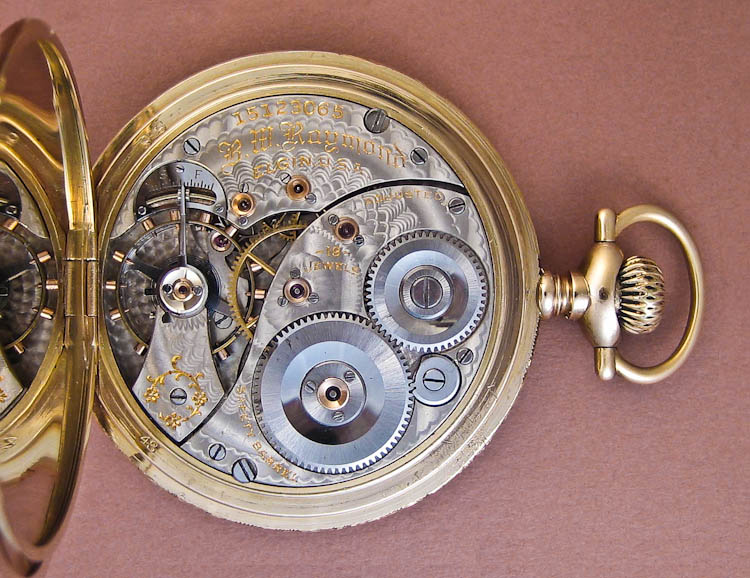
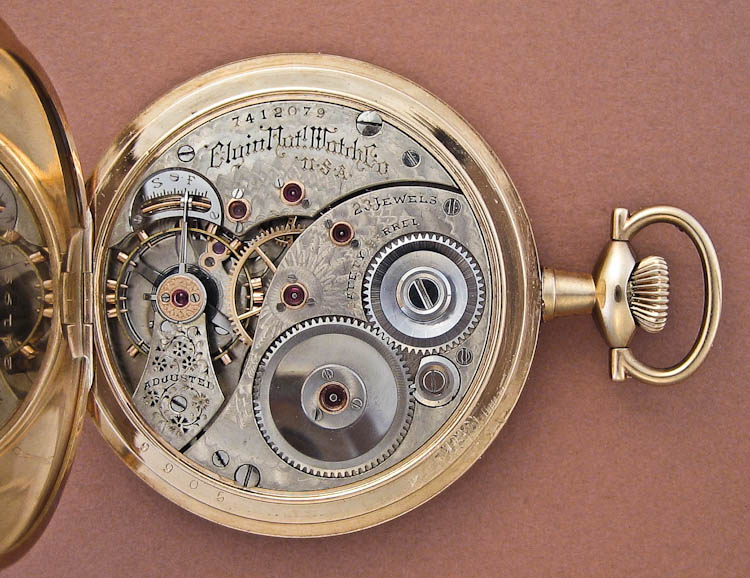
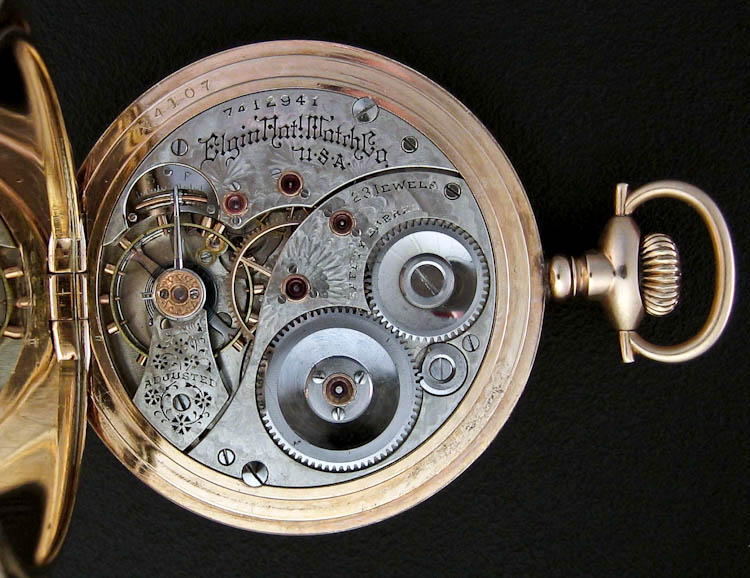
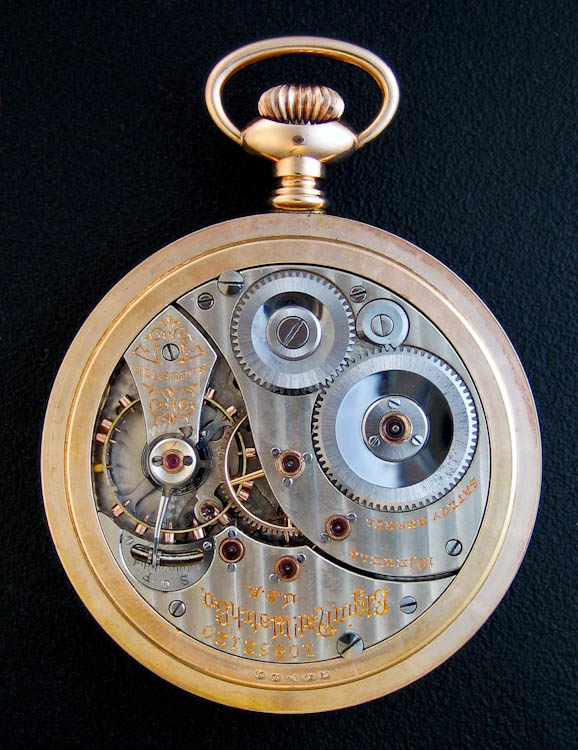
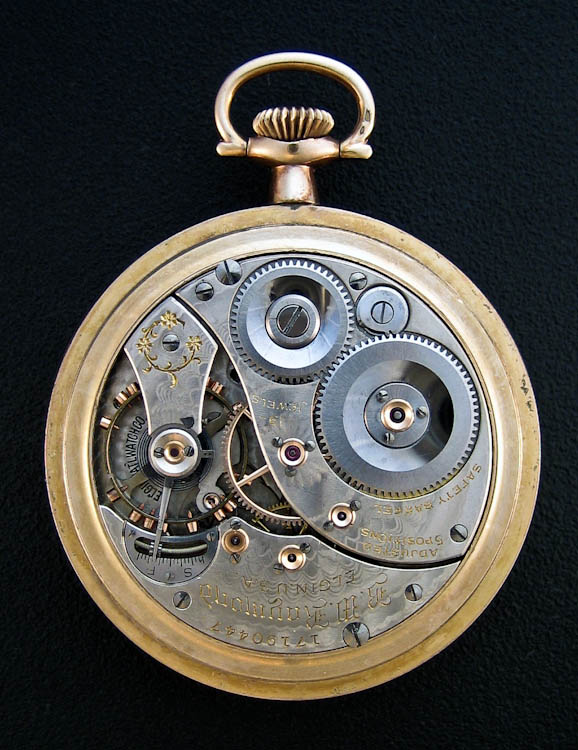
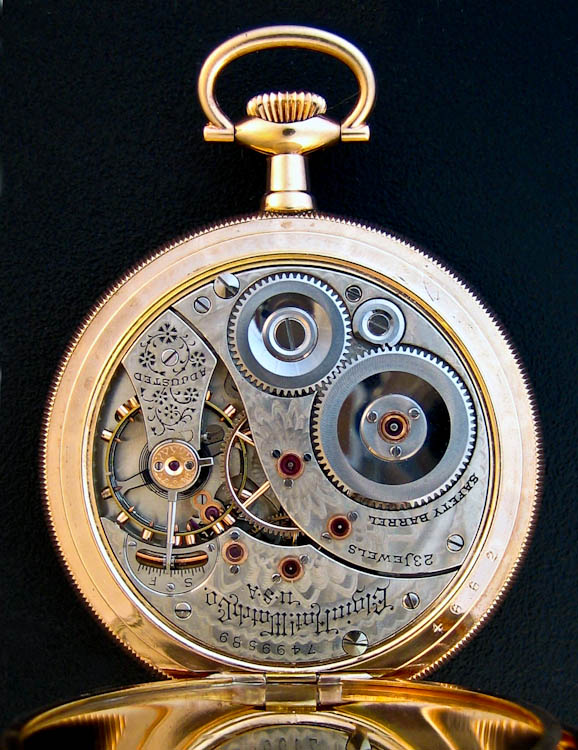
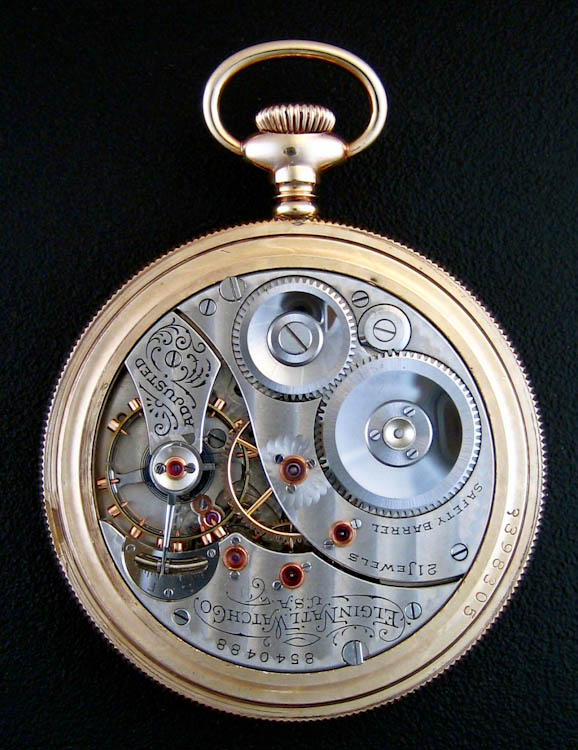
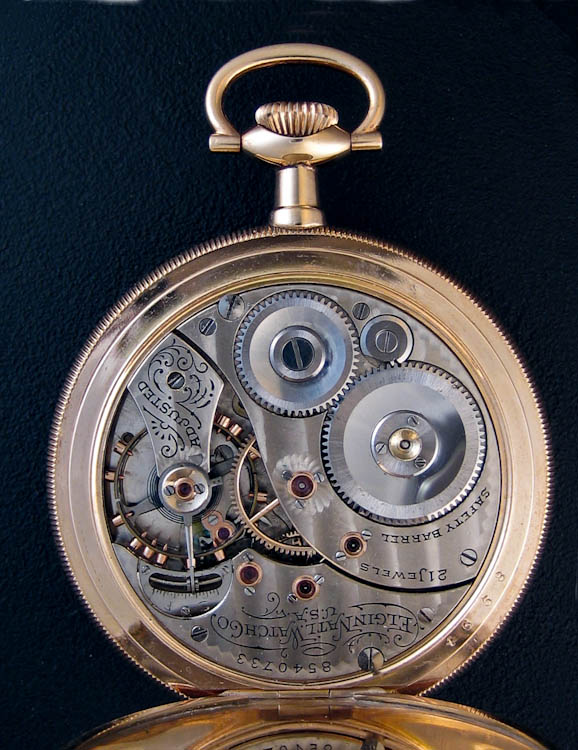
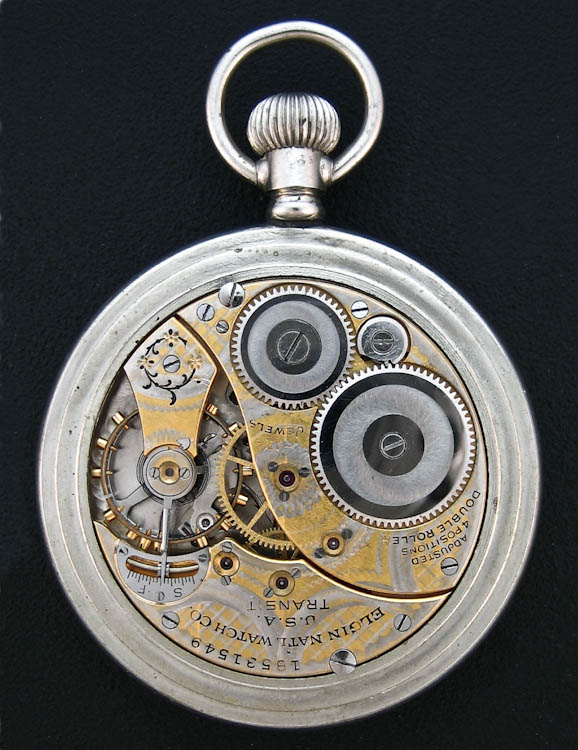
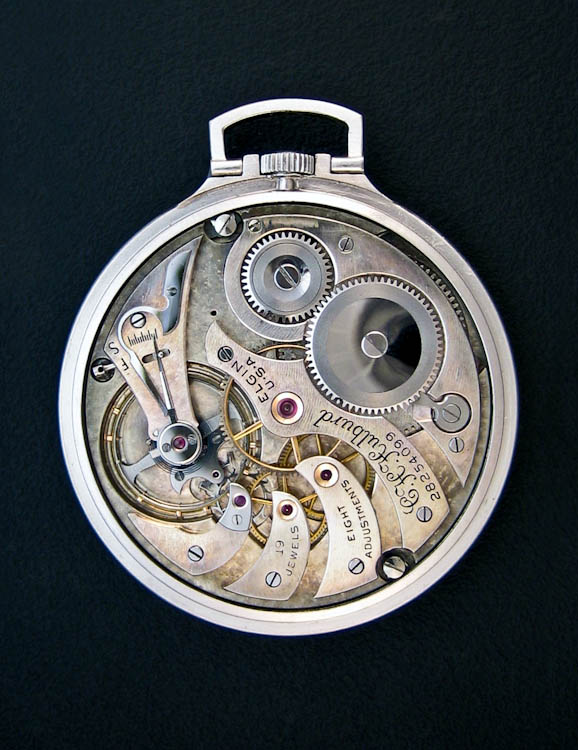
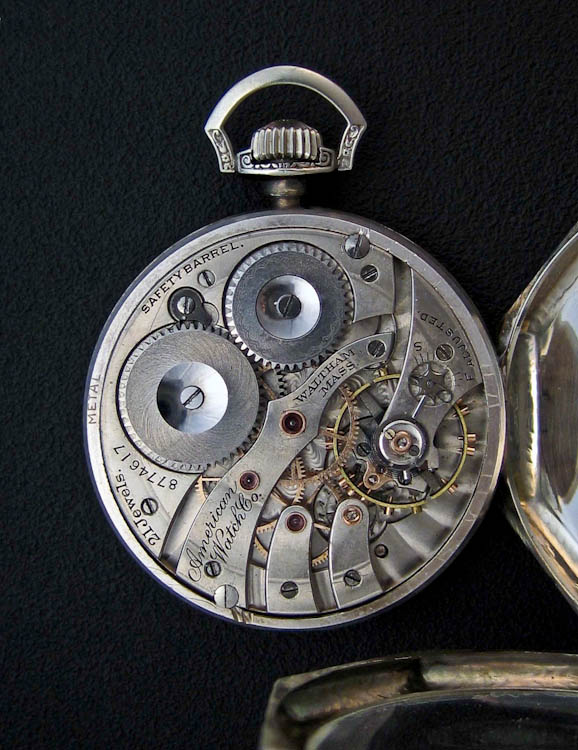
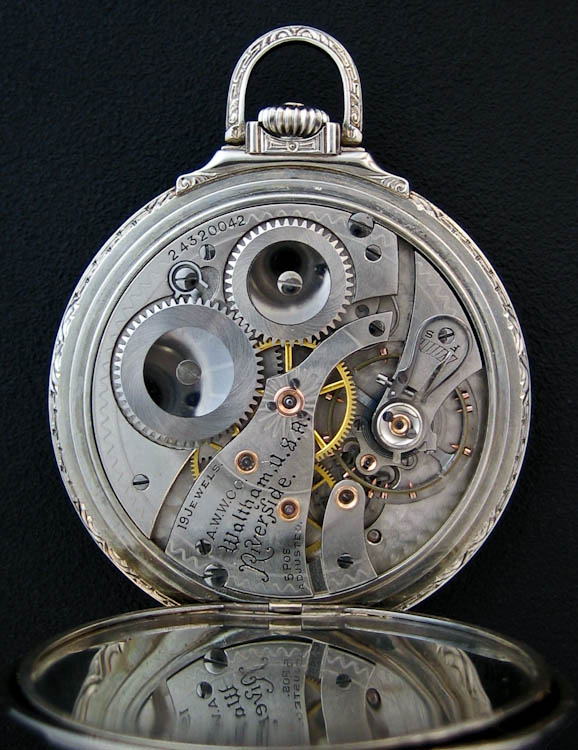
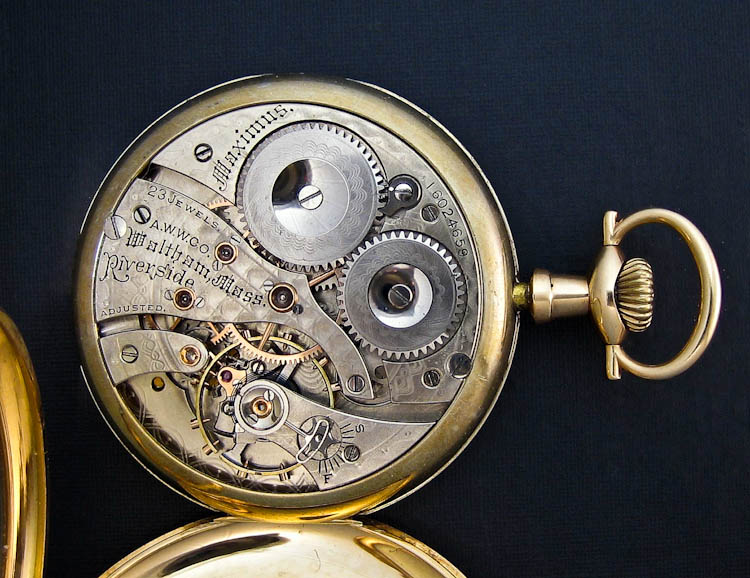
In the distant past watches were the prized possessions of the rich since they were hand crafted, rare, and of high cost. Even as they began to be in the reach of the average person you still saw a great deal of attention paid to the elements of design and construction. Middle grade to high grade watches made in the United States during the late 19th century may have been mass produced but a good deal of hand labor was spent in assuring that they were both functionally and aesthetically pleasing. Things that were never seen by the owner, such as the movement itself, were often elaborately decorated using a technique called “damaskeening” and “flashing”. Damaskeening was where a skilled worker had a machine which spun pointed wooden dowels (or another material) coated with abrasive to create patterns in the metal of the watch mechanism itself. The procedure created a kind of swirl which stood out from the surrounding area. Very often when you examine an upper tier movement from the golden age of U.S. watch production you’ll find that even areas only seen if the watch is disassembled have been embellished with elaborate patterns or close circles that look a little like fish scales. Flashing is where a contrasting color is applied to the movement which highlights the damaskeening. This is usually a very thin layer of gold.

damascening
Damaskeening patterns.

The movements themselves were designed to be pleasant to look at with curves and circles harmoniously incorporated. Smaller details like the written information on them was also done with flair in elaborate lettering. Some even had decorative elements like flowers engraved in the metal.

It’s this mechanical beauty that made me start to collect watches such as the ones below. All the timepieces pictured in the gallery are American 12 size late 19th to early 20th century pieces. Even if I had no idea what they did I’d find the craftsmanship appealing to look at.

Grateful To Not Be Listened To

This is another post about gifts that generous and (way too) nice people have taken the time and effort to give me. I have no idea why they bother to do so since as previously mentioned I’m just a distant curmudgeon who doesn’t really merit it. Still they gleefully ignore that completely and send things through my force field of grumps.

P1060346-151 August 25, 2009 1
Well, some things are an open book. Notice the red ribbon.

A long time ago in a galaxy far, far away I took some bindery courses and actually bound a few books by hand (I’ve still got some). I know that this takes more art than science to wind up with results that are attractive as well as useful. Mona is a person that that can craft journals and other bound items of great beauty. She sent me the one below which I’m indebted to her for. The amazing thing is she just started doing this not very long ago. It’s a sideline to her other hobbies like knitting and fountain pen mania but I’m certainly happy she took it up.

P1060319-124 August 25, 2009 1
A lovely Mona brand journal

My work hasn’t taken me far afield in quite some time but my friend Caloy’s livelihood takes him places I’ve both dreamt about and only vaguely familiar with. Dhaka, the capital of Bangladesh, is the latter. At a conference there recently he picked up a locally crafted embroidered pouch for me. It’s the perfect size to hold the stack of postcards I keep and the postage for them. It’s also strikingly attractive.

P1060393-198 August 25, 2009 1
Perfect for postcards.

I never know how to receive a token of friendship in person so I usually fidgit and make some inane quip about how someone else would be more worthy of the item. Use your imagination and insert that image here.

P1060298-103 August 25, 2009 1
When taking these pictures I saw this. Reinforces my hatred of geese.